- +91********22
- **********allab1997@gmail.com

| Category | IPS E-MAX |
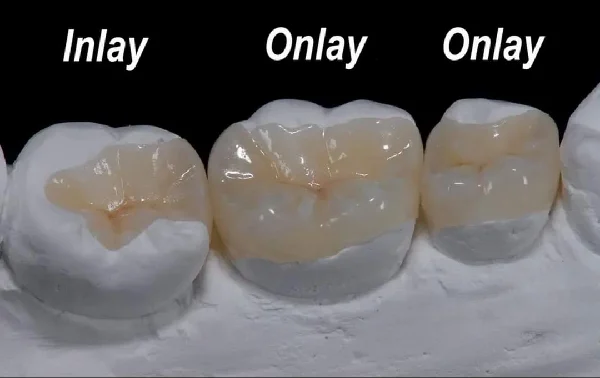
A dental inlay looks very much like a conventional filling in a tooth where the extent of the damage in a tooth is confined within the cusp of the teeth, as seen in the diagram above. An inlay is fabricated in the laboratory and then cemented to the prepared tooth. The advantage of an indirect method to restore a tooth, versus a filling made directly in the mouth, is that the inlay is created in a controlled environment absent of saliva and contaminants that can interfere with the bonding.
An onlay is indicated when the damage to the tooth extends beyond the confines of the cusp. The onlay design will encompass the missing cusp and will extend to any cusp where the structural integrity is compromised. Similar to inlays, the old fillings are removed, and the preparation of the tooth is modified and refined to maximize retention of the restoration. An impression of the tooth is made and sent to the laboratory to fabricate and once completed it is cemented in a similar fashion to the inlay. Both inlays and onlays can be fabricated from several different materials. Each material has its own advantages and disadvantages and is summarized below.


